
Choosing the right living situation for an aging parent or loved one is one of the hardest decisions a family can make. The advantages of senior living communities go far beyond basic care. They reshape daily life, protect health, and offer genuine peace of mind for both residents and the families who love them. Yet most families approach this decision with only half the picture, focusing on what’s lost rather than what’s gained. This guide gives you the full picture, with research-backed specifics, so you can make a confident, informed choice.
Table of Contents
- Key takeaways
- 1. The real advantages of senior living communities start with maintenance-free living
- 2. Enhanced social engagement and community support
- 3. Improved health outcomes and access to wellness programs
- 4. Safety and security advantages in senior living communities
- 5. Continuum of care and adaptability for changing needs
- My honest take on why families underestimate these benefits
- Let Assistedlivingadvisers help you find the right fit
- FAQ
Key takeaways
| Point | Details |
|---|---|
| Time and freedom reclaimed | Seniors recover roughly 6 hours per week by leaving home maintenance behind. |
| Social life protects the brain | Highly social seniors show only a quarter of the cognitive decline seen in isolated peers. |
| Safety is built into the design | Round-the-clock staffing and emergency alert systems reduce accident risks significantly. |
| Care grows with your loved one | Communities with a continuum of care allow residents to transition smoothly without uprooting their social world. |
| Health outcomes are measurably better | Seniors in communities experience lower mortality rates and fewer emergency room visits than those aging at home. |
1. The real advantages of senior living communities start with maintenance-free living
One of the most underrated senior community advantages is the complete elimination of household burdens. No more calling a plumber, worrying about the roof, or spending a Saturday afternoon mowing the lawn. That freedom is not a small thing.
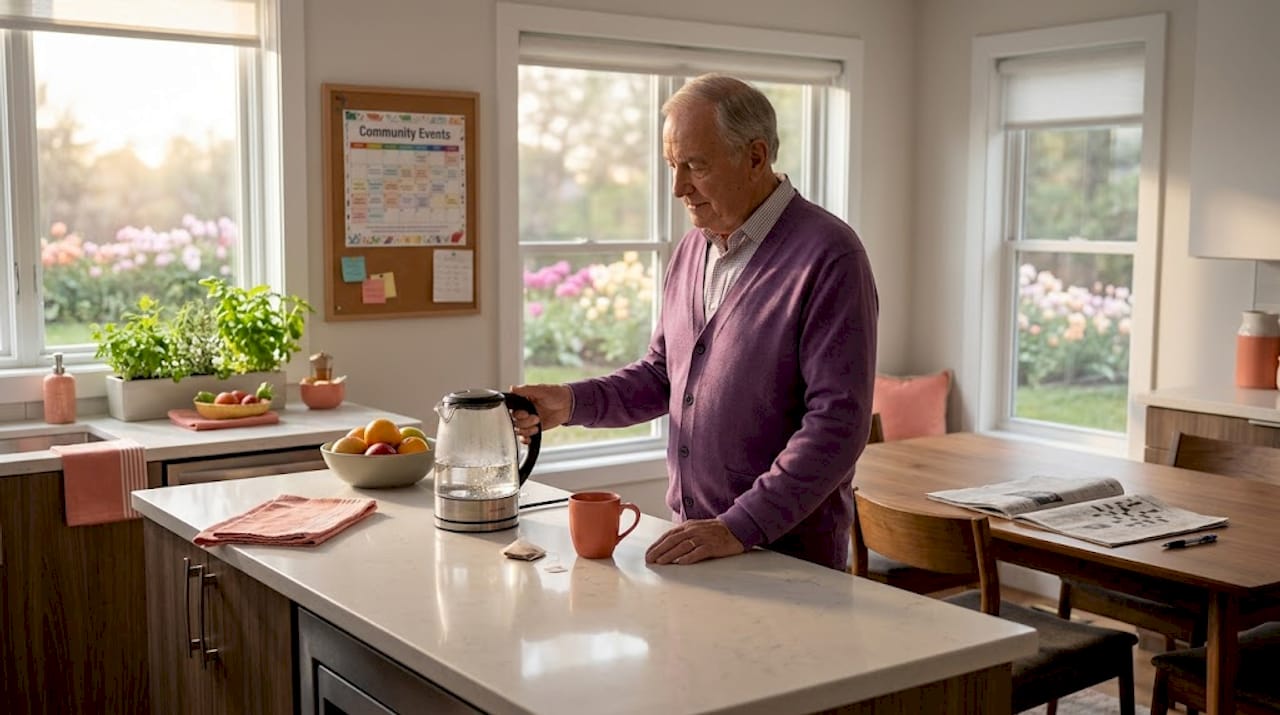
Residents in maintenance-free retirement communities reclaim about 6 hours weekly previously spent on chores and repairs. That is nearly a full workday every single week, returned to your loved one to spend on hobbies, friendships, or simply resting well. The emotional weight lifts too. Research shows that stress hormones from home worries are comparable to those triggered by serious financial anxiety, meaning a leaky faucet carries real psychological cost.
It is also worth doing an honest financial comparison. The monthly fee at a senior community may look high at first glance, but hidden costs of home upkeep and rising on-demand healthcare expenses frequently rival or exceed what a community charges. When those costs are bundled into one predictable monthly payment, budgeting becomes far less stressful for everyone.
- Lawn care, snow removal, and landscaping handled by staff
- Appliance repairs and unit maintenance covered
- Housekeeping services included in most plans
- No property taxes or homeowner’s insurance to manage
Pro Tip: When comparing costs, ask the community for a full amenity and services list. Compare it line by line against your loved one’s current monthly home expenses. Many families are surprised to find the gap is smaller than expected.
2. Enhanced social engagement and community support
Loneliness is not just uncomfortable. It is a quantifiable health risk that shortens lives and accelerates cognitive decline. Seniors living alone are especially vulnerable. Senior living communities address this directly through a built-in social environment that most people cannot recreate on their own.
Think about what structured community life actually provides: shared meals, book clubs, art classes, day trips, movie nights, and fitness groups. These are not optional extras. They are woven into daily life in ways that make connection feel natural rather than forced.
“Highly social seniors experience only a quarter of the cognitive decline compared to isolated peers, and report better physical health and overall life satisfaction.” How do Retirement Homes Guarantee a Healthier Senior Life?
The benefits of social engagement for seniors extend well beyond good moods. Regular social interaction is linked to stronger immune function, lower blood pressure, and reduced rates of depression. When your loved one sits down for dinner with neighbors who share their history and interests, that moment is quietly doing a great deal of health work.
Communities also offer structured programming specifically designed to match different personalities:
- Introverts can join small-group activities like gardening or crafting
- Social butterflies can participate in larger events and resident councils
- Those with cognitive concerns benefit from music therapy and memory-friendly programming
- Physically active residents enjoy group fitness, walking clubs, and swimming
3. Improved health outcomes and access to wellness programs
The health case for senior living communities is backed by real data. Older adults in these settings experience fewer emergency department visits than peers aging at home. That single fact should carry significant weight in any family conversation about this decision.
The reasons are not mysterious. Communities provide consistent access to wellness infrastructure that most private homes simply cannot match.
| Wellness Feature | Benefit for Residents |
|---|---|
| On-site fitness centers | Supports daily physical activity tailored for seniors |
| Group exercise classes | Boosts adherence through social accountability |
| Nutritious communal dining | Meals designed by dietitians for senior health needs |
| Health screenings and monitoring | Early detection of issues before they become emergencies |
| Physical and occupational therapy | Available on site or by referral without leaving the community |
Nutrition deserves special mention. Many seniors living alone eat poorly, not because they lack awareness, but because cooking full meals for one person every day is tiring and expensive. Community dining removes that barrier entirely while delivering meals calibrated to real nutritional needs.
Accessible fitness centers and friendly group activities have been shown to boost leisure-time physical activity among older adults in community settings. That consistent movement is one of the most powerful predictors of healthy aging.
Pro Tip: When touring a community, ask specifically about the staff-to-resident ratio during evenings and weekends. This is when health issues most often go undetected. A strong ratio off-peak hours is a reliable marker of overall care quality.
4. Safety and security advantages in senior living communities
Falls are the leading cause of injury-related death among older adults in the United States. At home, the risks are everywhere: slippery rugs, uneven sidewalks, poorly lit stairs, and no one nearby if something goes wrong. Senior communities are designed from the ground up to reduce these exact risks.
Assisted living facilities offer 24-hour staffing and emergency alert systems that can summon help in seconds. That kind of response time can be the difference between a manageable fall and a life-altering one.
Safety features built into well-designed communities include:
- Handrails and grab bars throughout common areas and residences
- Non-slip flooring and walk-in shower designs
- Emergency pull cords or wearable alert buttons
- Well-lit pathways and secured building access
- Medication management support to reduce errors
- Regular wellness check-ins from trained staff
Families often describe the shift to senior living as lifting a constant background worry they had been carrying for years. Knowing that someone trained is present at 3 a.m. when a parent gets up to use the bathroom changes the entire family’s quality of life, not just the resident’s.
5. Continuum of care and adaptability for changing needs
One of the most practical and often overlooked elderly living benefits is the ability to stay in the same community as care needs evolve. Moving an aging parent once is hard. Moving them two or three times as their health changes is genuinely traumatic for everyone involved.
Communities with a continuum of care solve this. A resident can begin in independent living while fully active, transition to assisted living when daily support becomes necessary, and move into memory care if dementia develops, all within the same campus and social network.
| Care Level | Who It Serves | Key Support Provided |
|---|---|---|
| Independent living | Active seniors needing minimal support | Maintenance-free lifestyle, social programming |
| Assisted living | Seniors needing help with daily tasks | Personal care, medication management, meals |
| Memory care | Seniors with Alzheimer’s or dementia | Secured environment, specialized programming |
Understanding the differences between assisted and independent living is a critical starting point for any family exploring options. The right entry point matters enormously.
Research also highlights something families rarely consider early enough: residents who move while still fully mobile build stronger social connections before health challenges arise. Those connections become a vital support system later. Moving in crisis mode, when needs are urgent and choice is limited, means your loved one misses the window to build that foundation.
My honest take on why families underestimate these benefits
I have watched hundreds of families go through this process, and the pattern is consistent. Most come in focused on care tasks. Can someone help Mom get dressed? Will Dad take his medications on time? Those questions matter, but they are only a fraction of the story.
What surprises families most, once their loved one has settled in, is the lifestyle transformation. The resident who spent two years barely leaving the house is now signing up for wine-tasting events and has a standing lunch group. That is not a small footnote. That is the difference between existing and living.
I have also seen the regret that comes from waiting too long. When someone moves in after a health crisis, they arrive exhausted and socially behind. The friends who would have become their community were already established in their routines. The window to build those relationships naturally had closed.
My honest advice: explore your options earlier than feels necessary. The pros of assisted living do not begin when health declines. They begin on day one, for anyone willing to embrace them.
— Eric
Let Assistedlivingadvisers help you find the right fit
If you are weighing options for a loved one in the New York, New Jersey, or Connecticut area, Assistedlivingadvisers offers free, personalized guidance through every step of the process.

Their advisers assess your loved one’s needs, preferences, and budget, then match you with vetted communities from their local network. Whether you are exploring independent living options for an active parent or looking for assisted living near you, they handle the research, arrange tours, and walk with you through the decision without any cost to your family. For families exploring memory care needs, the memory care communities page is a strong starting point. There is no obligation and no fee. Just expert guidance when you need it most.
FAQ
What are the main advantages of senior living communities?
Senior living communities provide maintenance-free housing, structured social engagement, on-site wellness programs, 24/7 safety support, and access to graduated care levels. Together, these benefits support better health outcomes and a measurably higher quality of daily life.
How do senior communities reduce loneliness?
Communities offer built-in social programming including group dining, clubs, outings, and events that create daily opportunities for connection. Research shows that highly social seniors experience significantly slower cognitive decline than isolated peers.
Are senior living communities safer than staying at home?
Yes. Senior communities are specifically designed to reduce fall risks and provide round-the-clock staffing along with emergency alert systems. Assisted living facilities provide monitored environments that dramatically reduce the response time to any health event.
When is the right time to consider senior living?
Earlier than most families think. Moving while a loved one is still active allows them to build social connections before health challenges arise, and residents who move proactively consistently report stronger satisfaction with community life than those who move in crisis.
What is a continuum of care in senior living?
A continuum of care means a single community offers multiple levels of support, from independent living through assisted living and memory care. This allows residents to receive increasing levels of help without leaving their home, their friends, or their routines.
Recommended
- Top Benefits of Assisted Living Communities – Assisted Living Advisers
- The Top 5 Benefits of Assisted Living Communities for Seniors – Assisted Living Advisers
- The Vast Benefits of Assisted Living Communities for Aging Seniors – Assisted Living Advisers
- How Assisted Living Communities Can Provide Better Outcomes for Seniors – Assisted Living Advisers
Let’s Work Together To Find The Ideal Senior Living Community For Your Loved One.
Assisted Living Advisers is a FREE, personalized service offering expert guidance in determining the ideal community for your loved one based on physical needs, location preferences and finances.