
Moving a loved one to a senior living community ranks among the most emotionally charged decisions a family can make. It touches on independence, identity, safety, and love all at once. For families in the New York City tri-state area, the challenge is even sharper. Tight apartments, strict building move policies, and a dizzying number of community options across Manhattan, New Jersey, and Connecticut add layers of complexity that most guides simply ignore. This step-by-step resource walks you through the warning signs, the planning process, the emotional work, and the care options so you can move forward with clarity and confidence.
Table of Contents
- Recognizing when it’s time: Signs and triggers
- Planning the move: Steps, support, and resources in NYC
- Navigating emotions: Supporting your loved one and family
- Choosing the right level of care: Comparing options
- What most families get wrong, and how to do it better
- Take the next step with expert guidance
- Frequently asked questions
Key Takeaways
| Point | Details |
|---|---|
| Recognize signs early | Spot difficulties with daily tasks and social isolation to avoid crisis-driven moves. |
| Plan for NYC logistics | Anticipate challenges like downsizing, elevator policies, and limited space unique to city moves. |
| Support emotional adjustment | Staying involved and focusing on community integration makes the transition smoother for seniors. |
| Choose the right care level | Match the senior’s health and lifestyle to independent, assisted, or memory care for best results. |
| Seek expert help | Advisers and local resources can streamline the process and improve outcomes for families. |
Recognizing when it’s time: Signs and triggers
Most families don’t plan the transition to senior living. They react to it. A fall. A hospitalization. A phone call from a neighbor. Crisis-driven moves are stressful, rushed, and often result in settling for a community that isn’t the best fit. The good news is that recognizing the warning signs early gives your family real choices.
Struggles with daily activities like bathing, cooking, and managing medications are among the most reliable indicators that a higher level of support is needed. These are called Activities of Daily Living, or ADLs, and when they become difficult or unsafe, it’s time to have a serious conversation.
Here are the key warning signs to watch for:
- Frequent falls or near-misses, especially in the bathroom or on stairs
- Medication errors, such as missed doses, double dosing, or confusion about prescriptions
- Social isolation, including withdrawal from friends, family, and activities they once loved
- Noticeable weight loss or poor nutrition, often a sign that cooking has become too difficult
- Caregiver burnout, when a family member providing care is exhausted, resentful, or overwhelmed
- Cognitive changes, including memory lapses, confusion about dates, or getting lost in familiar places
- Declining home safety, such as unpaid bills, spoiled food in the fridge, or neglected hygiene
Understanding whether your loved one needs independent vs assisted living depends heavily on how many of these signs are present and how severe they are. One or two signs might call for in-home support. Several signs together, especially falls combined with cognitive changes, usually point to a more structured living environment.
“Planning ahead, rather than waiting for a medical crisis, gives families access to a wider range of communities, more time to involve the senior in the decision, and far less stress during the actual move.”
Pro Tip: Start the conversation before it feels urgent. A casual, curious tone works better than a worried, pressured one. Try framing it as exploring options rather than making an immediate change. This lowers defensiveness and opens the door for honest dialogue.
Planning the move: Steps, support, and resources in NYC
Once you’ve identified that a move is appropriate, the planning phase begins. This is where many families feel overwhelmed, especially in the NYC area where logistics are genuinely more complicated than in other parts of the country.
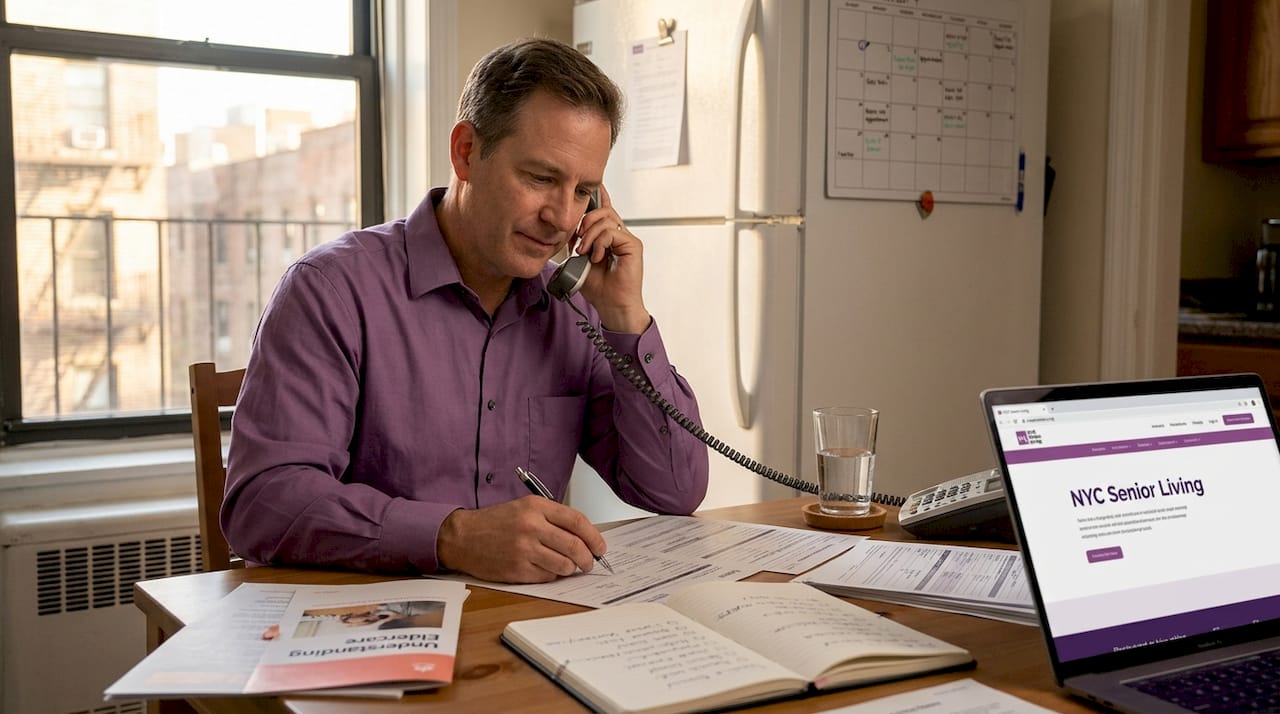
NYC-specific challenges include building elevator reservation policies, strict move-in time windows, limited storage space, and the need to downsize significantly before a move. Communities like The Bristal (with locations in Manhattan, Long Island, Westchester, and New Jersey), Atria Senior Living in Stamford, CT, and Edgehill in Stamford are popular regional options, but each has its own application process and availability timelines.
Here is a practical sequence to follow:
- Assess your loved one’s current and future needs. Think about medical requirements, mobility, cognitive status, and social preferences. A formal needs assessment from a doctor or eldercare professional gives you a clear baseline.
- Research and tour communities. Visit at least three to five communities. Observe how staff interact with residents, ask about staffing ratios, and attend a meal if possible.
- Address space and downsizing. Most senior living apartments are smaller than a family home. Start sorting belongings early and focus on what brings comfort and familiarity rather than what fills space.
- Gather legal and financial documents. This includes power of attorney, healthcare proxy, insurance information, and financial records. Many communities require these before completing an application.
- Involve your loved one in every decision possible. Even small choices, like which furniture to bring or which room layout to request, help preserve dignity and reduce resistance.
- Coordinate the logistics. Reserve elevators, hire movers experienced with senior relocations, and confirm move-in dates with the community well in advance.
Families who work with a local adviser for preparing for the move consistently report less stress and better outcomes. Advisers know which communities have waitlists, which ones specialize in specific medical needs, and how to match personality and lifestyle preferences to the right environment.
| Planning step | Key action | NYC-specific note |
|---|---|---|
| Needs assessment | Consult doctor or eldercare adviser | Include cognitive and mobility evaluation |
| Community research | Tour 3 to 5 communities | Check elevator and move-in policies |
| Downsizing | Sort and reduce belongings | Storage is limited; prioritize comfort items |
| Legal documents | Gather POA, healthcare proxy, insurance | Required by most NYC-area communities |
| Move coordination | Book movers, reserve elevator | Schedule during permitted building hours |
| Post-move follow-up | Plan visits and check-ins | Build routine quickly to ease adjustment |
Pro Tip: Use a local eldercare adviser before you start touring. They can narrow your list from dozens of communities to three or four that genuinely match your loved one’s needs, budget, and personality. This saves weeks of research and avoids the heartbreak of falling in love with a community that doesn’t accept your insurance or has a two-year waitlist. You can also explore downsizing tips to make the physical transition smoother.
Navigating emotions: Supporting your loved one and family
The logistics of a move are manageable. The emotions are harder. Both your loved one and your family members will go through a genuine grieving process, and that’s completely normal.
Emotional challenges are common during this transition. Guilt is the most reported emotion among adult children, often accompanied by anxiety about making the wrong choice. Seniors themselves frequently experience grief over leaving their home, fear about losing independence, and sometimes outright resistance to the move. These feelings don’t mean the decision is wrong. They mean it’s significant.
Here are concrete actions families can take to support a positive adjustment:
- Visit frequently in the first few weeks. Consistent family presence signals that the move is not abandonment.
- Bring familiar items from home. A favorite chair, family photos, a beloved lamp. These small details create psychological continuity.
- Encourage participation in community activities. Many communities offer fitness classes, art programs, movie nights, and cultural events. Gently nudge your loved one to try one activity per week.
- Introduce them to neighbors and staff by name. Social connection is one of the strongest predictors of a successful adjustment.
- Give it time. Most seniors need 60 to 90 days before a new community starts to feel like home.
Reframing the move is powerful. Instead of “we’re moving you out of your home,” try “you’re moving into a place where people are around you, meals are taken care of, and help is always nearby.” The shift from loss to gain is not just semantic. It genuinely changes how seniors experience the transition.
“Social engagement and structured daily support are among the most effective tools for reducing anxiety and homesickness after a move to senior living. Communities that offer robust activity programs see faster, more positive adjustments from new residents.”
Learning how seniors thrive in communities can also help families set realistic expectations and feel more confident in their decision.
Choosing the right level of care: Comparing options
Not all senior living is the same. The three main levels are independent living, assisted living, and memory care, and choosing the right one from the start prevents unnecessary and disruptive transitions later.
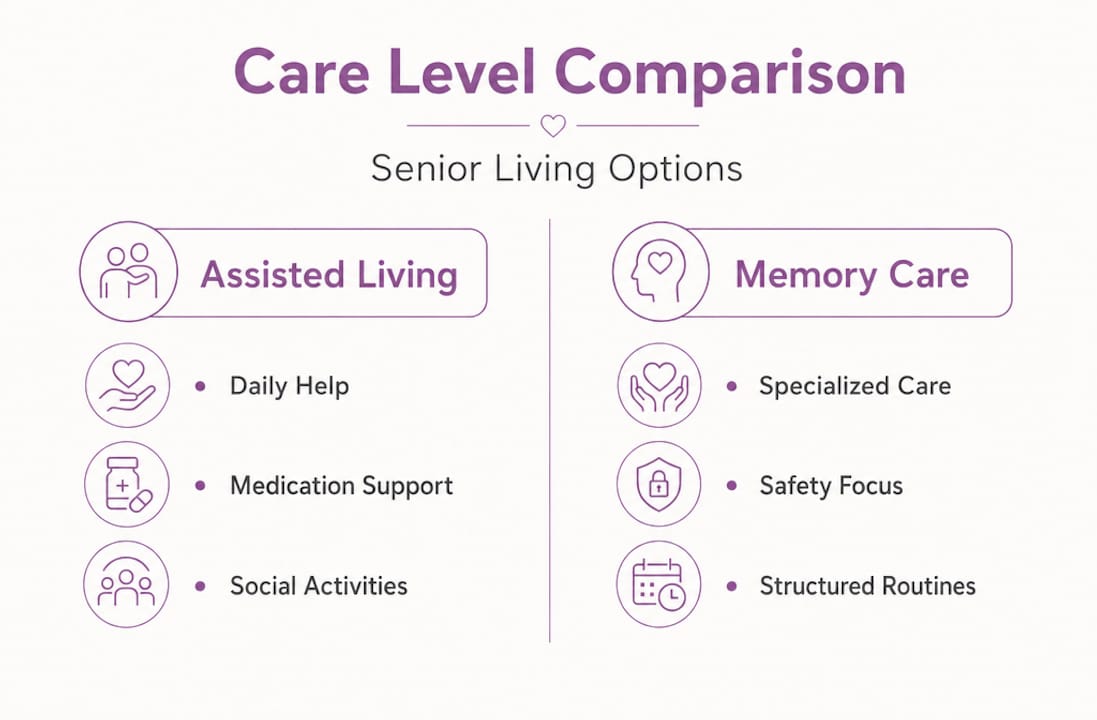
Transitioning between levels is common as needs change. A senior who enters independent living may eventually need assisted living support, and someone with advancing dementia will require the secure, specialized environment of memory care. Planning for this possibility at the outset is smart.
| Level of care | Best for | Key features |
|---|---|---|
| Independent living | Active seniors needing minimal support | Private apartments, social programs, no medical care |
| Assisted living | Seniors needing help with ADLs | Personal care, medication management, 24-hour staff |
| Memory care | Seniors with dementia or cognitive decline | Secure environment, specialized programming, trained staff |
Here is a quick guide to when each level is appropriate:
- Independent living fits seniors who are largely self-sufficient but want community, convenience, and freedom from home maintenance
- Assisted living is right when daily tasks like dressing, bathing, or managing medications require regular support
- Memory care is necessary when cognitive decline creates safety risks, including wandering, confusion about time and place, or inability to manage basic self-care
For families dealing with resistance, the advice is consistent: bring it up more than once, gently, without pressure. One conversation rarely changes a senior’s mind. Several calm, caring conversations over weeks often do. You can explore the differences in detail by reviewing assisted living vs memory care or reading a broader assisted living overview to understand what daily life actually looks like in these communities.
Reassessing care needs every six months is a good practice. Medical conditions change, and the right level of care today may not be the right level in 18 months.
What most families get wrong, and how to do it better
After working with hundreds of families across the NYC tri-state area, we’ve noticed the same mistakes coming up again and again. They’re understandable mistakes. But they’re also preventable.
The biggest mistake is waiting. Families delay the conversation because it feels too hard, too final, or too sad. Then a crisis forces a rushed decision with limited options. The growing demand for assisted living in NYC means waitlists at quality communities are real. Families who start exploring six to twelve months before they think they need to have dramatically better outcomes.
The second mistake is prioritizing amenities over care fit. A beautiful dining room and a rooftop terrace are lovely. But if the staffing ratio is poor, the memory care program is underdeveloped, or the community culture doesn’t match your loved one’s personality, those amenities won’t matter. Ask hard questions on tours. How do staff handle a resident who refuses care? What’s the turnover rate among caregivers? How are medical emergencies managed?
The third mistake is underestimating NYC logistics. Families often assume a move can happen in a week or two. In Manhattan or Brooklyn, coordinating building elevator access, hiring experienced movers, and completing community paperwork can easily take four to six weeks. Build that time into your plan from the start.
Pro Tip: Create a “comfort kit” for the first week in the new community. Include a favorite blanket, a framed family photo, a familiar snack, and a written note from family members. This small gesture does more for emotional adjustment than almost anything else. Also, sign your loved one up for one community activity before move-in day so they have something to look forward to immediately.
The families who navigate this transition best are not the ones who had the easiest circumstances. They’re the ones who started early, asked for help, and kept their loved one at the center of every decision.
Take the next step with expert guidance
Making the right senior living choice for your family doesn’t have to feel impossible.

At Assisted Living Advisers, we work with families across New York, New Jersey, and Connecticut to match seniors with communities that truly fit their needs, personalities, and budgets. Whether you’re just beginning to explore options or ready to schedule tours this week, our advisers provide personalized support at every stage, from needs assessment through move-in day and beyond, at no cost to your family. Start by browsing assisted living communities in your area, or learn how the right community can improve quality of life for your loved one. When you’re ready to talk, find assisted living nearby and connect with a local adviser today.
Frequently asked questions
What are the earliest signs that a move to senior living might be necessary?
Common early signs include difficulty with daily activities like bathing and cooking, frequent falls, social withdrawal, and repeated medication mistakes. Noticing two or more of these signs together is usually a clear signal to start exploring options.
How long does it take to transition to a senior living community in NYC?
The process typically takes anywhere from a few weeks to several months, depending on community availability, paperwork, and NYC-specific logistics like elevator reservations and downsizing. Starting early gives your family the most flexibility.
How can families help seniors adjust emotionally after moving?
Family involvement and community activities are the two most effective tools for easing the transition. Frequent visits, familiar personal items, and encouraging new friendships all significantly reduce homesickness and anxiety.
What’s the difference between assisted living and memory care?
Assisted living provides help with daily tasks like dressing and medication management, while memory care offers specialized support for seniors with dementia, including secure environments and staff trained specifically in cognitive care.
Recommended
- How to Prepare to Move into an Assisted Living Community – Assisted Living Advisers
- How To Simplify The Move To An Assisted Living Community – Assisted Living Advisers
- Sometimes Saving a Life is as Simple as Finding the Right Senior Living Accommodation for Your Loved One. – Assisted Living Advisers
- Senior Move-In Coordination That Lowers Stress – Assisted Living Advisers
Let’s Work Together To Find The Ideal Senior Living Community For Your Loved One.
Assisted Living Advisers is a FREE, personalized service offering expert guidance in determining the ideal community for your loved one based on physical needs, location preferences and finances.